
Ekota (Unity) Project
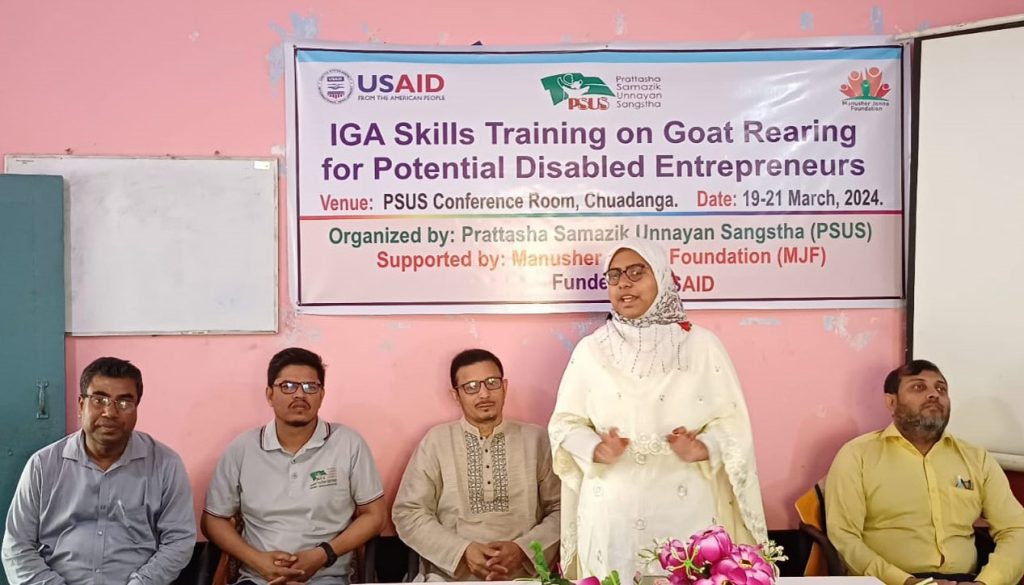
With financial support from USAID, assistance from Manusher Jonno Foundation, and implementation by Prottasha Samazik Unnayan Sangstha (PSUS), the Ekota (Unity) Project is carrying out various activities focused on social justice and fairness in Chuadanga Sadar and Alamdanga Upazilas. Below is a brief overview of the project:
Project Name: Ekota (Unity) Project
Donor Organization: USAID
Aligns with SDGs: SDG 5, SDG 10 and SDG 16.
Total Beneficiaries: Men – 623, Women – 927, Boys – 205, Girls – 233, Youth (Male) – 328, Persons with Disabilities – 1,789, Harijan Community – 65, Dalit Community – 37, Blacksmiths – 13, Potters – 9, Das Community – 293, Fishermen – 34. Total: 4,566.
Project Duration: March 2023 – August 2027
Overall Goal of the Project: Underprivileged persons with disabilities will gain access to legal services and government facilities, and by organizing themselves through associations, they will develop capabilities and increase their economic opportunities.
Specific Objectives of the Project:
- Objective 1: To implement skill development programs for persons with disabilities and their organizations to enhance leadership and organizational capacities. This will enable them to undertake diverse initiatives in their respective areas.
- Objective 2: To strengthen the capacity of disability organizations so they can voice their opinions at policy-making levels and actively participate in decision-making processes for overall development.
Activities:
Monthly staff meeting
- Quarterly meeting for DPOs
- DPO orientation on disability law, rights, and legal aid fund
- DPO orientation on disability law, rights, and legal aid fund
- Meeting with Disability Rights Committees, Legal Aid Committees, Safety-net Committees, police, UP, UNO, Social Welfare, and JPUF
- Orientation to judicial officers, legal aid officers, police officers, panel lawyers, social welfare officers, civil surgeons, JPUF members on disabled people’s rights, gender equality & social inclusion, disabled women & girls, and legal aid fund.
- IGA skills training for potential disabled entrepreneurs (in collaboration with youth, women, and social welfare departments)
- Leadership training for DPO leaders
- Quarterly Social Support/Pressure Group Meetings at 2 Upazila Level
- Community Gathering at the Upazila level
- Observance of Thematic Days
- Annual gathering by PNGO and its DPO Leaders
- Half-yearly Community Dialogue of PLWD, Local Citizens, and Government Representatives at Upazilas
- Quarterly Meetings with Disability Rights and Protection Committee at the District and Upazila level
- Monthly meetings with Self-Help Groups
- Primary Health Support (Medicine, Tests) & need-based support for victims
- Interactive Dialogue with Potential Job Providers
- Annual General Meeting (AGM) of DPOs
- Exposure Visit for DPO Leaders by Each PNGO
- Half-Yearly Coordination Meetings with Different Committees, such as DRPC (District & Upazila), DLAC, UZLAC, ULAC, Banik Shamiti, Bazar Committee, SMC, CCSG, Bus Malik Shamiti.
- 2-day Training Workshop on Local Resource Mobilization and Financial Management.
- Disability Convention.
Project Outputs/Outcomes:
- 146 beneficiaries have received healthcare services through this project.
- 57 individuals have received legal assistance.
- 135 people have received income-generating training, including:
- 25 in tailoring
- 35 in livestock rearing and cattle fattening
- 30 in goat rearing
- 30 in duck and poultry farming
- 72 individuals have received leadership development training.
- 50 individuals have received entrepreneurship development training.
- 50 individuals have received ICT training.
- 17 individuals have received social security benefits and Golden Citizen Cards.
- 46 individuals have become members of Union Parishad Standing Committees.
- Prattasha Samajik Unnayan Sangstha (PSUS) has been selected as a member of the Committee for the Rights and Protection of Persons with Disabilities and the Legal Aid Committee at district and upazila levels.
